
U.S. STEEL BUILDING
No building in Pittsburgh projects corporate power like the former U.S. Steel building. Becoming the headquarters of University of Pittsburgh Medical Center (UPMC) symbolizes the transition of the city from a great manufacturing power to a city reliant on “Eds and Meds.” Completed in 1970, its 64 floors make it the region’s tallest building.
Its triangular footprint and massive exterior support columns made of Cor-ten, a corrosion-resistant oxidized steel rolled at the Homestead Works, make the building distinctive. With the rise of African-American militancy in the 1960s and demands for black employment opportunities in the trades, the building, along with Three Rivers Stadium, became a focus of militant demonstrations in 1969-71. Years of protests led to the famous “Pittsburgh Plan” that opened skilled trades jobs to many blacks.
In 1979, the building was again the scene of angry labor demonstrations as 400 Youngstown workers protesting the shutdown of US Steel’s Ohio Works joined with several hundred local unionists to occupy the first two floors of the headquarters. As the building was taken over by the University of Pittsburgh Medical Center, it became the site of numerous healthcare protests, especially with UPMC’s closing of Braddock Hospital. As the Pittsburgh region’s largest employer, it is the target of protests and civil disobedience on behalf of its workers’ efforts to unionize. As a purported non-profit with international operations in nearly a dozen countries, its refusal to pay taxes has left the city in a constant budgetary squeeze.
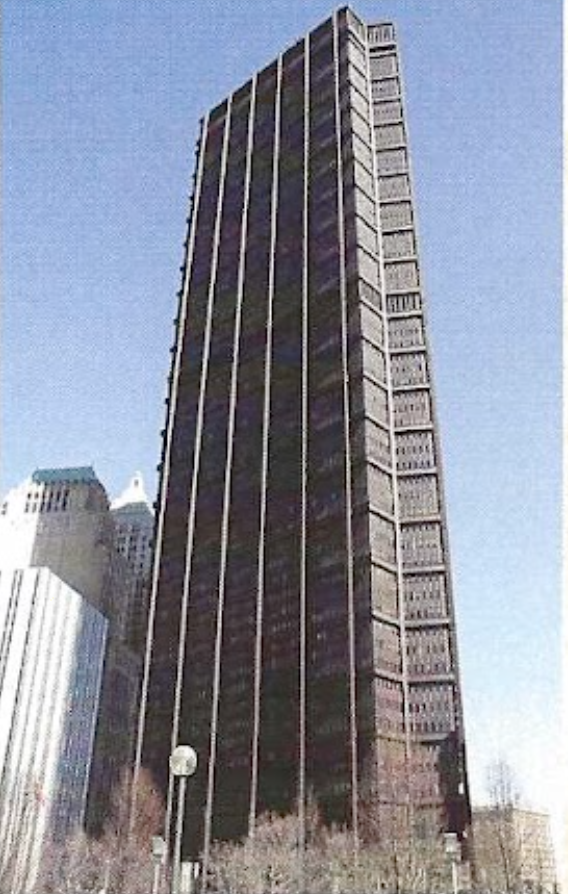
U.S. Steel building (now UPMC), 600 Grant St.
 Pittsburgh Labor History Trail