
THE 1877 RAILROAD STRIKE
Location: Liberty Ave. at 28th Street on traffic island
The 1877 railroad strike was the bloodiest event in Pittsburgh’s labor history. The strike was a response to a severe economic depression that gripped the country.
Railroad owners strengthened their economic and political dominance while becoming fabulously wealthy. Workers were infuriated that wealthy companies continued paying shareholders while exacting a series of wage cuts on employees.
George Westinghouse’s invention of the airbrake in Pittsburgh, although a great advance in worker safety and train controls, resulted in massive job cuts at a moment when working class communities were suffering high unemployment and shrinking wages.
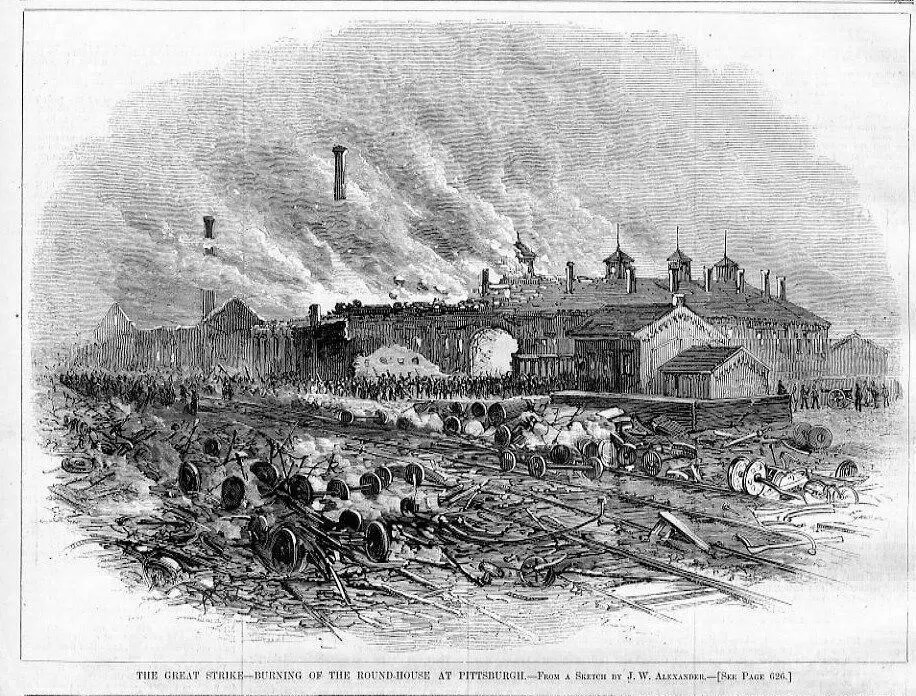
Railroad Strike Burning Of Round-House At Pittsburgh Railroad Tracks History
Railroad workers organized a Trainman’s Union in June 1877 to protest wage and job cuts, but the powerful Pennsylvania Railroad led resistance to any negotiations and fired worker representatives.

1877 Railroad Strike marker, Liberty Ave. at 28th Street on traffic island
In mid-July a strike erupted in Martinsburg, West Virginia, and spread rapidly. For three days, a popular uprising seized Pittsburgh and shut down freight shipments with little violence or disorder. A thousand troops from Philadelphia were summoned when the Pittsburgh militia refused to disperse the crowds. At the 28th Street crossing, troops fired into a crowd killing 20 people.
Pittsburgh militia and citizens then drove the Philadelphians from the city and set fire to Pennsylvania Railroad property. The violence prompted President Hayes to send federal troops, recently removed from the occupation of the South, into Pittsburgh to quell the rebellion.
 Pittsburgh Labor History Trail