
COTTON MILL WOMEN STRIKES (1845, 1848)
Location: 325 Sixth Ave, Pittsburgh, PA 15222
Early 19th century Pittsburgh’s furnaces, forges and mills supplied iron, tools, machinery, bottle and window glass and other manufactured goods by river to the heartland. Cotton bales and tobacco leaf provided lightweight southern products to carry on return to the Smoky City. Allegheny City, now Pittsburgh’s North Side, was a growing textile manufacturing area in the 1840s with seven major factories and more than 1,500 workers, mostly young women and girls.
Machine-driven mass production pioneered in textile mills demanded repetitive operations for long hours. Owners hired mostly young women and girls for a wage that was about half the male unskilled labor rate of a dollar a day. The women fiercely resisted the imposition of a 12-hour day. A strike for the 10-hour day in 1845 shut down the mills for more than a month and featured the forcible ejection of replacements by the women. The strike inspired the Pennsylvania Legislature to legislate a 10-hour day in textiles and to ban child labor under 12 years old. This was seen as a major victory for labor.
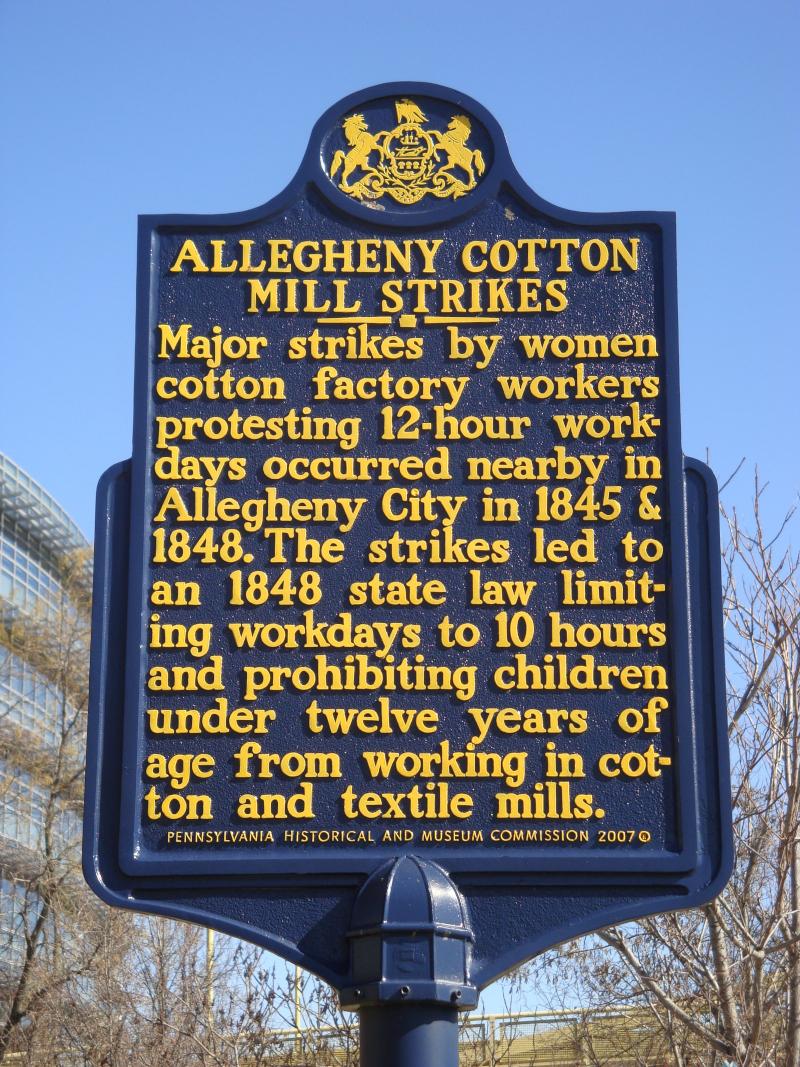
Allegheny Landing, North Side, near the river between 6th & 7th St. Bridges
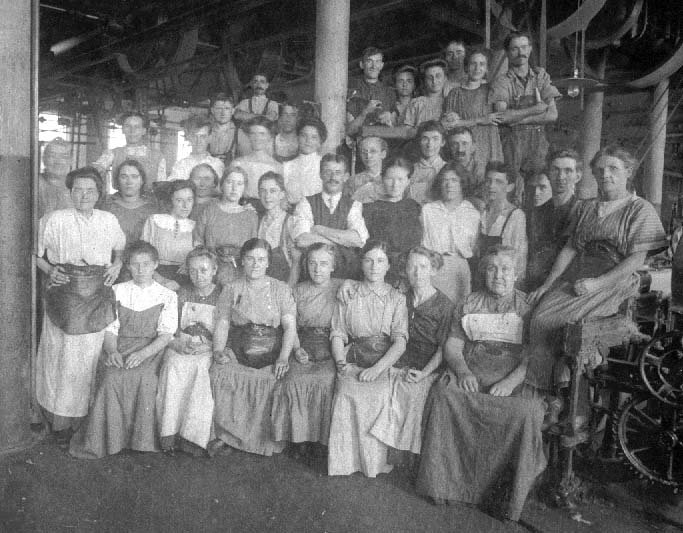
In 1848, a legal loophole allowing workers to waive their individual 10-hour rights provoked a lockout by the owners. After a month, a mill tried to reopen using women who signed away their rights. Militant pickets surrounded the plant and forcibly ejected the strikebreakers. The women were led by “a beautiful, darkeyed, pale, well-built Kentucky girl with long flowing tresses” referred to as “The Unknown”.
 Pittsburgh Labor History Trail